

On August 20, the 2026 APEC Customs‑Business Dialogue, hosted by the General Administration of Customs of China, opened in Dalian. Sun Meijun, Minister of the General Administration of Customs, Gu Jun, Vice‑Governor of Liaoning Province, Eduardo Pedroza, Executive Director of the APEC Secretariat, and Sergey Shklyaev, Minister for Customs Cooperation of the Eurasian Economic Commission (EEC), delivered speeches at the event. Ian Saunders, Secretary‑General of the World Customs Organization (WCO), addressed the conference via video link. Zhang Baofeng, Vice‑Minister of the General Administration of Customs, chaired the meeting. Xiong Maoping, Deputy Secretary of Liaoning Provincial Party Committee and Secretary of Dalian Municipal Party Committee, and Li Qiang, Mayor of Dalian, were present.
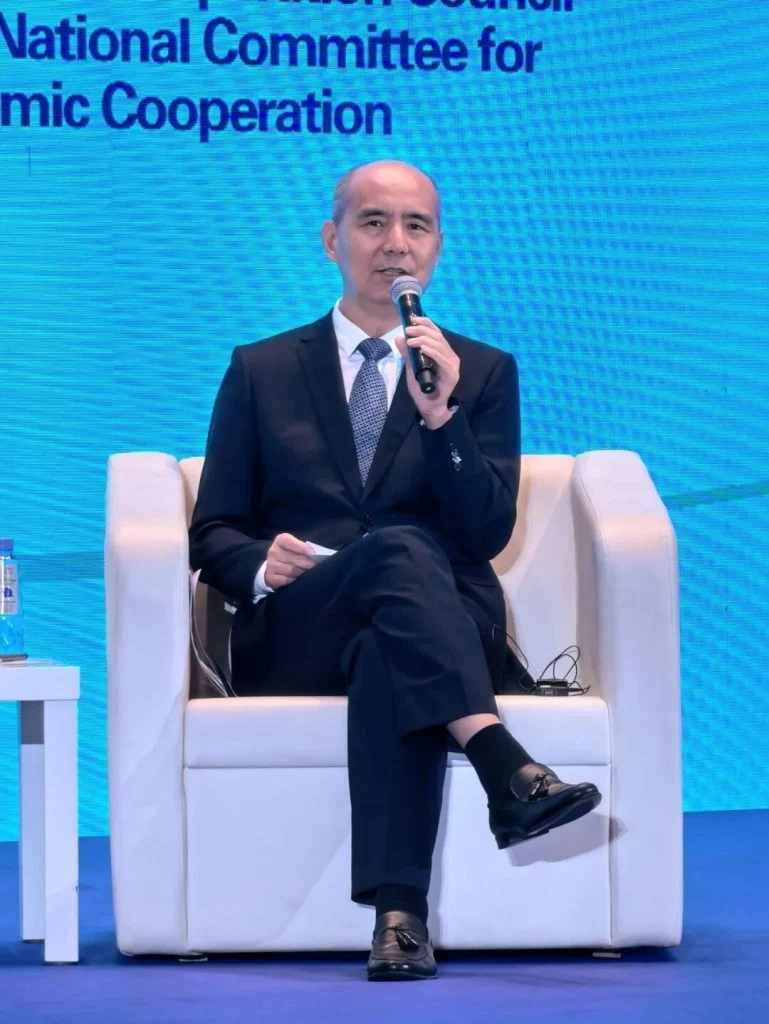
Xu Zengde, Chairman of China Certification & Inspection Group (CCIC), was invited to the conference. He shared his strategic insights during the panel discussion themed “Building Smart‑Customs Partnerships Driven by Technology and Innovation”.
Xu Zengde noted that Smart Customs development is evolving from standalone intelligence toward collaborative governance. The key to multi‑party cooperation lies in building a sound digital‑trust system. For years, CCIC has pushed forward its “Digital CCIC” initiative. It has built capabilities for digital‑trust evaluation, served as a bridge for digital trust, and created new inspection‑testing models combining traceability and artificial intelligence. A set of replicable, scalable practical outcomes has been achieved. As a national‑level leader in quality technical services, CCIC stands ready to deepen business collaboration with customs authorities and other stakeholders. It will contribute to the high‑quality development of Smart Customs.
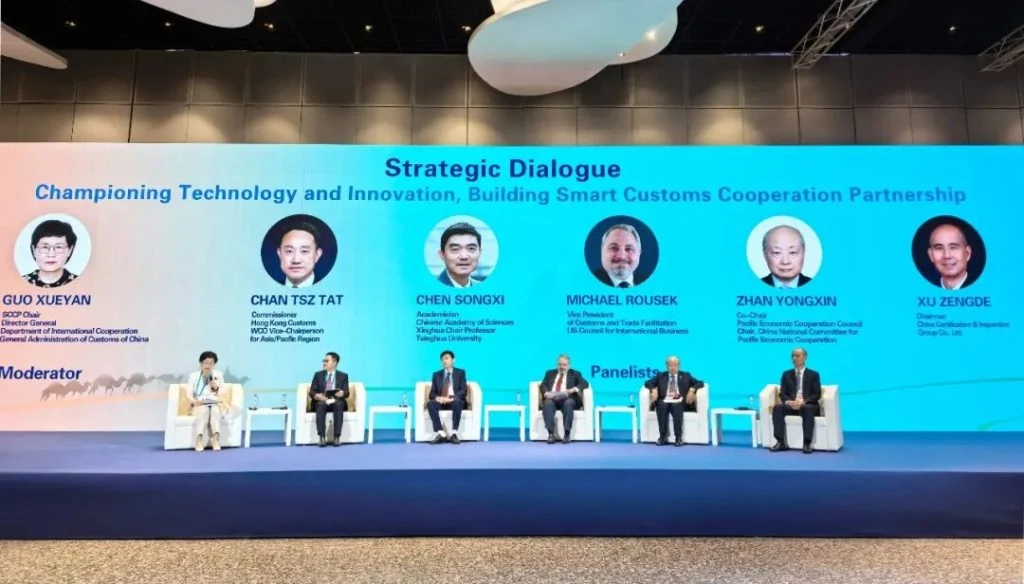
Xu put forward three proposals for Smart‑Customs development.First, build an inclusive Smart‑Customs cooperation mechanism. Under the Smart‑Customs Partnership Program, lightweight data interfaces, standardized digital documents and tiered capacity‑building plans should be developed for paperless trade, cross‑border e‑commerce, green trade and other scenarios. This allows economies at different development stages and small‑and‑medium‑sized enterprises to take part in and share the benefits of digital transformation.
Second, create rule‑based “soft connectivity” to keep supply‑chains stable and unblocked. Customs authorities may set regulatory targets and acceptance requirements. International and regional organizations can coordinate rule alignment. Conformity‑assessment bodies can offer technical verification support. All parties should jointly work out operational standards for data elements, digital credentials, verification interfaces and responsibility traceability. High‑level mutual‑recognition commitments can then be turned into actionable soft‑connectivity rules.
Third, speed up digital‑intelligent transformation for Smart‑Customs ecosystems. Stakeholders should connect their data and interfaces, and improve their capacity to identify trustworthy regulatory information from massive datasets. Solutions need to address bottlenecks in cross‑border data flows. This will ensure verifiable data sources, traceable workflows, inspectable conformity results and authorized data usage. A solid foundation can then be laid for safe, trusted cross‑border data applications.
Xu also outlined three practical pathways to deliver these proposals.
- Upfront data sharing: Automated data‑collection technologies can record key operations on tamper‑proof digital ledgers. Digitized reports will be sent to destination‑port customs in advance. Data will travel ahead of physical goods to cut clearance time.
- Interoperable standards: CCIC is building a multi‑standard database and intelligent compliance engine for bulk commodities. At ports of shipment or origin, one‑stop inspections can generate electronic certificates that fit data‑format requirements of destination countries. This streamlines cross‑border compliance and improves customs clearance efficiency for exports.
- Mutual recognition of results: Upgrade trusted commercial outcomes to officially‑accepted results. Support customs authorities to directly adopt valid conformity‑assessment reports. One single inspection certificate can circulate efficiently across major APEC economies, making “one‑time testing, global acceptance” a reality.
<<previous posts